Developments in the steel market
Outlook steel market
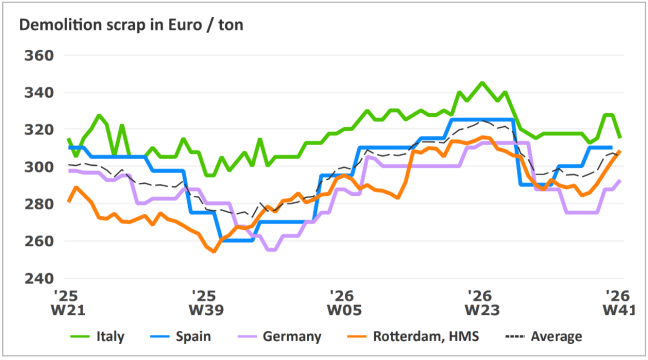
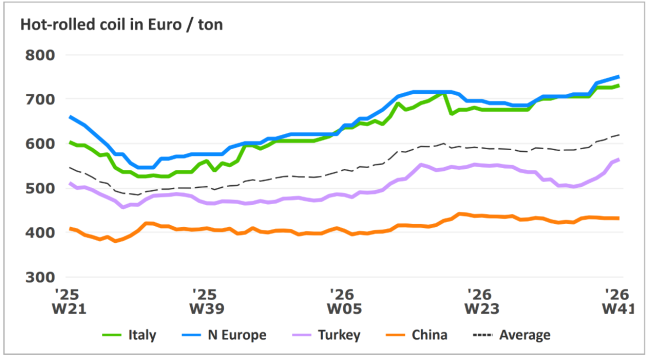
Following a period of subdued activity, demand across most end-use sectors remains moderate, but developments on the supply side are having a growing impact on the market and putting upward pressure on prices. Recent changes to European trade measures, including revised safeguard quotas and the further implementation of CBAM requirements, are limiting import availability and affecting sourcing decisions.
European steel demand remains relatively stable, supported by continued activity in the machinery sector and improving business sentiment. The construction market shows a mixed picture in Europe, driven by infrastructure investments from the government. Automotive production continues to face challenges from weaker export orders and increased international competition. Industry confidence has improved, however showing a somewhat more positive outlook for the coming months.
One of the main developments is the significant drop in steel imports into Europe. Import volumes are well below last year’s levels as quotas are filling up more quickly and additional duties increase the cost of non-EU material. At the same time, European mills are operating at relatively high capacity levels. Maintenance outages and operational disruptions are also limiting their ability to increase production. This combination is expected to tighten supply further during the rest of 2026.
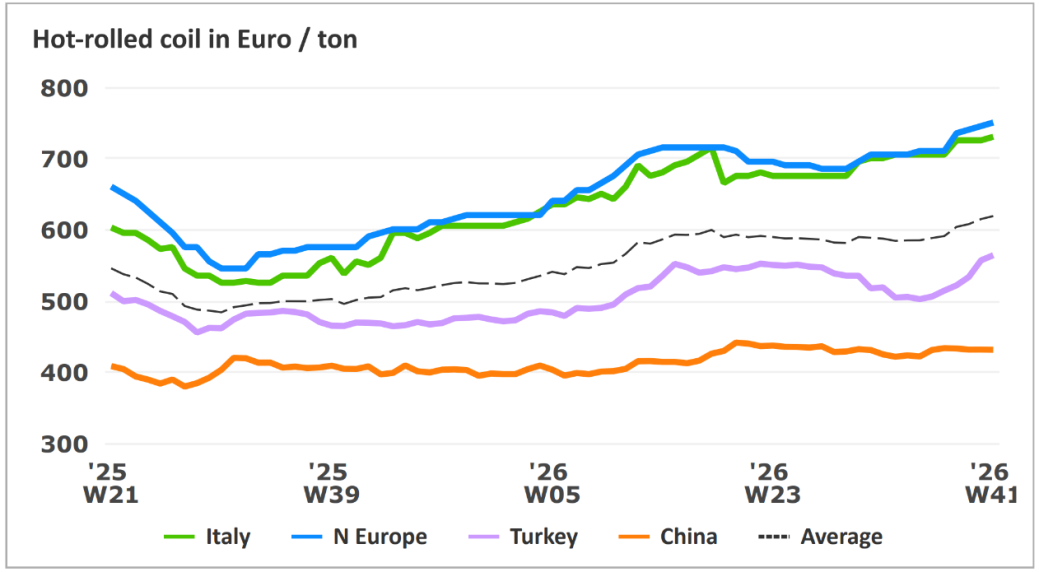
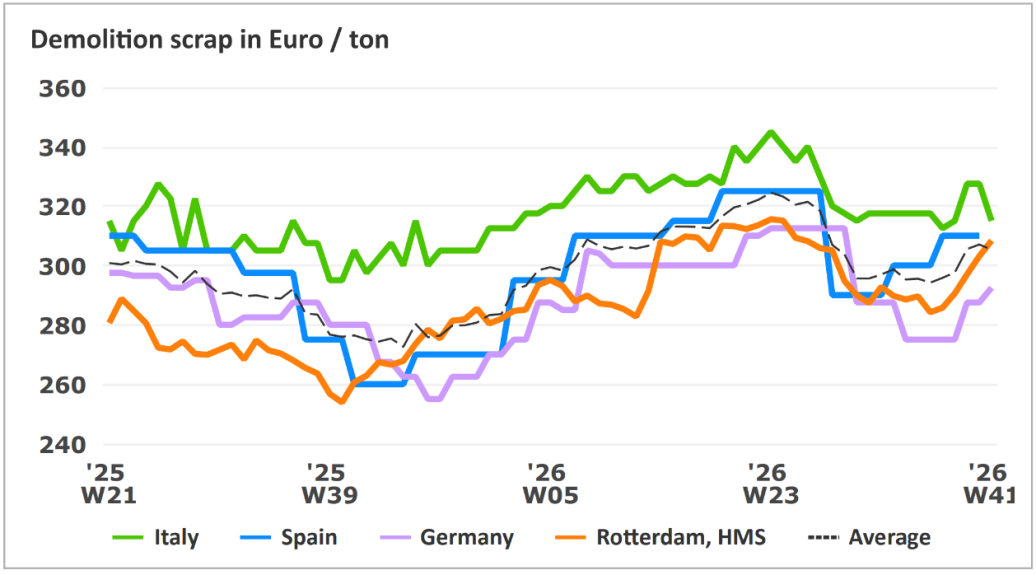
Higher costs are also putting pressure on steel prices. Energy prices have climbed to their highest levels in several years, while carbon costs remain high and raw material prices have also increased. These developments are increasing production costs across Europe and strengthening mills’ efforts to improve margins.
Looking ahead, the market generally expects prices to gradually increase during the fourth quarter and into 2027. Products that are particularly affected by import restrictions, such as cold-drawn and welded tubes, may experience stronger price increases. With availability becoming tighter, it will become increasingly important to make purchasing decisions in time and closely monitor supply chains, quotas and logistics.
European trade measures are having a growing impact on steel imports. Revised safeguard quotas have reduced the amount of steel that can be imported into the EU without additional duties. Once these quotas are filled, additional duties can make imported material more expensive. This is already affecting sourcing decisions and the availability of certain products. At Van Leeuwen, our extensive stock helps us maintain reliable availability and continue meeting our customers’ needs.
CBAM is also having an increasing impact on imports. Importers need to provide information on the carbon emissions related to imported steel, while CBAM costs are making some non-EU material less attractive compared to European alternatives.
From the 1st of October 2026, new requirements also apply to the melt-and-pour origin of imported steel. The Mill Test Certificate (MTC) will be the main document used to prove where the steel was melted and poured. A transition period will apply until October 2027, where alternative documents may be accepted. After that the MTC will become mandatory.
More questions? We are happy to help with any questions about these regulations or their impact on your business. Feel free to reach out to your regular Van Leeuwen contact or check our dedicated FAQ page:CBAM and FAQ
CBAM & Safeguard Measures & Melt and Pour
CBAM & Safeguard Measures & Melt and Pour
European trade measures are having a growing impact on steel imports. Revised safeguard quotas have reduced the amount of steel that can be imported into the EU without additional duties. Once these quotas are filled, additional duties can make imported material more expensive. This is already affecting sourcing decisions and the availability of certain products. At Van Leeuwen, our extensive stock helps us maintain reliable availability and continue meeting our customers’ needs.
CBAM is also having an increasing impact on imports. Importers need to provide information on the carbon emissions related to imported steel, while CBAM costs are making some non-EU material less attractive compared to European alternatives.
From the 1st of October 2026, new requirements also apply to the melt-and-pour origin of imported steel. The Mill Test Certificate (MTC) will be the main document used to prove where the steel was melted and poured. A transition period will apply until October 2027, where alternative documents may be accepted. After that the MTC will become mandatory.
More questions? We are happy to help with any questions about these regulations or their impact on your business. Feel free to reach out to your regular Van Leeuwen contact or check our dedicated FAQ page:CBAM and FAQ
CBAM is also having an increasing impact on imports. Importers need to provide information on the carbon emissions related to imported steel, while CBAM costs are making some non-EU material less attractive compared to European alternatives.
From the 1st of October 2026, new requirements also apply to the melt-and-pour origin of imported steel. The Mill Test Certificate (MTC) will be the main document used to prove where the steel was melted and poured. A transition period will apply until October 2027, where alternative documents may be accepted. After that the MTC will become mandatory.
More questions? We are happy to help with any questions about these regulations or their impact on your business. Feel free to reach out to your regular Van Leeuwen contact or check our dedicated FAQ page:CBAM and FAQ
Following a period of subdued activity, demand across most end-use sectors remains moderate, but developments on the supply side are having a growing impact on the market and putting upward pressure on prices. Recent changes to European trade measures, including revised safeguard quotas and the further implementation of CBAM requirements, are limiting import availability and affecting sourcing decisions.
European steel demand remains relatively stable, supported by continued activity in the machinery sector and improving business sentiment. The construction market shows a mixed picture in Europe, driven by infrastructure investments from the government. Automotive production continues to face challenges from weaker export orders and increased international competition. Industry confidence has improved, however showing a somewhat more positive outlook for the coming months.
One of the main developments is the significant drop in steel imports into Europe. Import volumes are well below last year’s levels as quotas are filling up more quickly and additional duties increase the cost of non-EU material. At the same time, European mills are operating at relatively high capacity levels. Maintenance outages and operational disruptions are also limiting their ability to increase production. This combination is expected to tighten supply further during the rest of 2026.
Higher costs are also putting pressure on steel prices. Energy prices have climbed to their highest levels in several years, while carbon costs remain high and raw material prices have also increased. These developments are increasing production costs across Europe and strengthening mills’ efforts to improve margins.
Looking ahead, the market generally expects prices to gradually increase during the fourth quarter and into 2027. Products that are particularly affected by import restrictions, such as cold-drawn and welded tubes, may experience stronger price increases. With availability becoming tighter, it will become increasingly important to make purchasing decisions in time and closely monitor supply chains, quotas and logistics.
European steel demand remains relatively stable, supported by continued activity in the machinery sector and improving business sentiment. The construction market shows a mixed picture in Europe, driven by infrastructure investments from the government. Automotive production continues to face challenges from weaker export orders and increased international competition. Industry confidence has improved, however showing a somewhat more positive outlook for the coming months.
One of the main developments is the significant drop in steel imports into Europe. Import volumes are well below last year’s levels as quotas are filling up more quickly and additional duties increase the cost of non-EU material. At the same time, European mills are operating at relatively high capacity levels. Maintenance outages and operational disruptions are also limiting their ability to increase production. This combination is expected to tighten supply further during the rest of 2026.
Higher costs are also putting pressure on steel prices. Energy prices have climbed to their highest levels in several years, while carbon costs remain high and raw material prices have also increased. These developments are increasing production costs across Europe and strengthening mills’ efforts to improve margins.
Looking ahead, the market generally expects prices to gradually increase during the fourth quarter and into 2027. Products that are particularly affected by import restrictions, such as cold-drawn and welded tubes, may experience stronger price increases. With availability becoming tighter, it will become increasingly important to make purchasing decisions in time and closely monitor supply chains, quotas and logistics.
Outlook steel market
Developments in the steel market